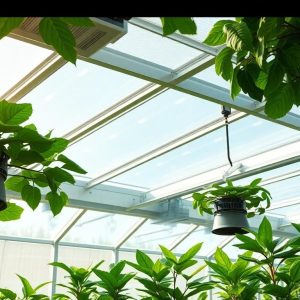
Greenhouse cleaner and disinfectant products designed for polycarbonate panels and galvanised steel frames, universal surface cleaner for algae and deposits, concentrated disinfectant for seasonal deep clean. Free UK delivery.
A clean greenhouse is a more productive greenhouse. This is not a matter of aesthetics, it is a direct statement about growing performance. Polycarbonate panels covered in algae, mineral deposits, and the residue of a summer’s shading solution transmit measurably less light than clean panels, and the reduction is most significant in the autumn and winter months when available light is already the primary limiting factor on plant growth. A greenhouse cleaned thoroughly in autumn does more to support good growing in February and March than any other single maintenance action.
The cleaning products available for KLASIKA and BALTIC LT greenhouses address two distinct maintenance tasks that require different products, different timing, and different application methods. Using the right product for each task protects the Brett Martin polycarbonate panels and galvanised steel frame while delivering the cleaning outcome which is emphatically not the case for some common cleaning products that appear to work but cause cumulative damage to polycarbonate glazing.
The two greenhouse cleaning tasks and the right product for each
External panel and frame cleaning the universal concentrated surface cleaner
The seasonal external clean addresses what accumulates on the outside of the greenhouse through the growing season: airborne algae spores that establish as green or black surface growth on polycarbonate panels, mineral deposits from hard water running off the roof and down the sides, lichen beginning to colonise lower panels in shadier positions, and from the end of summer the residue of any shading solution that was applied in May or June and needs to be removed before light levels drop in autumn.
The universal concentrated surface cleaner handles all of these in a single product, applied to the exterior of the panels and frame by brush or garden sprayer, left for the specified contact time, and rinsed off with clean water. The formulation is effective on polycarbonate panels, galvanised steel frame sections, guttering, downpipes, and the surrounding hard surfaces paving, concrete, and any other surface in the greenhouse area that has accumulated organic growth or surface deposits.
For polycarbonate greenhouse panels specifically, this is also a product that removes the greenhouse shading solution applied in summer without damaging the panel surface. The shading solution is designed to wash off naturally in autumn rain, but in sheltered positions a greenhouse in a courtyard or against a south-facing wall the panels may retain shading residue that requires active cleaning to remove before the lower-light months.
Internal seasonal disinfection the concentrated greenhouse disinfection solution
The annual deep disinfection is a different task from external panel cleaning, and it uses a different product. Where the external clean addresses surface contamination visible to the eye, the internal disinfection addresses the invisible reservoir of disease inoculum that accumulates in a greenhouse through the growing season on frame surfaces, staging, bed edges, panel inner faces, and in crevices in the glazing bar channels where debris and moisture collect.
Botrytis cinerea (grey mould) spores, fusarium residues, bacterial canker inoculum, and powdery mildew spores all persist on greenhouse surfaces from one season to the next. Without a thorough autumn disinfection, newly planted crops in March and April are introduced into a contaminated environment and begin the season at a disadvantage. The concentrated greenhouse disinfection solution is a broad-spectrum product effective against bacteria, viruses, and fungi applied to all internal surfaces after crops and plants have been removed, left to achieve the specified contact time, and rinsed thoroughly before any new plants are introduced.
The disinfection is the most important annual maintenance action in a greenhouse. It takes approximately one to two hours in a 3m × 6m greenhouse (clearing, applying, allowing contact time, rinsing) and its effect of starting each new season from a genuinely clean pathogen load is impossible to replicate with any other single action.
What not to use on a polycarbonate greenhouse: the important guidance no one else explains
This is the information that matters most to owners of Brett Martin polycarbonate greenhouses who have reached for a cleaning product from under the kitchen sink and used it without checking its suitability first.
Bleach and bleach-containing products should not be used on polycarbonate panels. Sodium hypochlorite, the active ingredient in household bleach, degrades polycarbonate at a molecular level, causing surface crazing, increased brittleness, and loss of optical clarity over time. The effect is not immediately visible after a single application, but repeated use of bleach on polycarbonate panels accelerates the degradation that the Brett Martin co-extruded UV protection is designed to prevent. Bleach is effective on algae and mould but the damage it causes to the panel surface is not worth the cleaning result.
Ammonia-based cleaners Many general-purpose glass and surface cleaners contain ammonia that cause surface crazing on polycarbonate and should be avoided entirely on panels. Some window cleaning products contain ammonia concentrations that are problematic even in a single application.
Abrasive cleaning tools should not be used on polycarbonate. Scourers, wire brushes, and abrasive cloths create micro-scratches on the panel surface that accumulate light-scattering damage and provide a texture that algae colonises more readily in subsequent seasons. Soft cloths, soft brushes, and low-pressure hose or garden sprayer are the correct application methods.
Solvent-based products including acetone, white spirit, and many general-purpose degreasers dissolve the surface of polycarbonate and must be kept away from panels and any connection between panels and frame components.
Jeyes Fluid, one of the most commonly used greenhouse cleaning products in the UK, is appropriate for disinfection of hard surfaces, concrete, paths, and garden equipment. For internal greenhouse disinfection of staging, soil beds, and frame metal surfaces, it is effective. It should not be applied directly to polycarbonate panels at standard concentrations highly diluted application is sometimes used, but the specialised greenhouse disinfection solution is the more appropriate product for a polycarbonate greenhouse specifically.
How to clean a polycarbonate greenhouse: the seasonal schedule
Autumn (September–October) the primary cleaning window, ideally carried out after the summer crops are cleared and before any overwintering plants are introduced.
Apply the universal surface cleaner to external panels, working along each panel run with a soft brush or low-pressure sprayer. Allow contact time per the product instructions. Rinse with clean water from a hose, working from the ridge down. Repeat on the guttering, downpipes, and frame sections. Address any shading solution residue on south-facing panels specifically.
Once external cleaning is complete: remove all remaining plant material and crop debris from the interior. Apply the concentrated disinfection solution to all internal surfaces frame sections, panel inner faces, glazing bar channels, staging and shelf surfaces, and the soil surface of raised seedbeds if these are not being cleared and refilled. Allow contact time. Rinse thoroughly. Ventilate fully before introducing any new plants or overwintering stock.
Spring (February–March) a lighter clean before the main growing season begins.
External panels benefit from a second application of surface cleaner in late February or early March, when any algae that established through the winter months can be removed before the growing season and the higher light transmission supports early propagation. The internal disinfection is not typically repeated in spring unless the greenhouse was heavily contaminated the previous season.
Summer (ongoing) panel washing as needed.
A mid-summer rinse of external panels plain water from a hose or watering can maintains light transmission through the season without requiring product application. If algae is establishing on lower panels in a wet summer, a diluted application of the surface cleaner followed by a rinse manages it without waiting for the autumn clean.
Protecting panel light transmission: why cleaning matters to growing performance
Brett Martin 4mm twin-wall polycarbonate transmits approximately 80–85% of available light when clean. A panel with established algae growth, a green or grey surface bloom that is visible from a distance, transmits significantly less, with the reduction depending on the density and type of growth. In the low-light months of January through March, when day length and sun angle combine to make light the primary constraint on plant growth, this reduction is directly relevant to the speed of germination, the rate of seedling development, and the productivity of any overwintering crops.
The autumn clean is not a cosmetic exercise. It is the action that ensures the greenhouse enters its most light-limited period of the year with panels performing at or close to their specified transmission values, giving propagation and early growth the maximum possible light from the first days of February onward.
Supporting keyword targets naturally used in this copy:
Primary:
– greenhouse cleaner (×10)
– greenhouse cleaning (×6)
Secondary terms covered:
– greenhouse disinfectant / greenhouse disinfection (×9)
– polycarbonate greenhouse cleaner / polycarbonate cleaner (×5)
– greenhouse panel cleaner (×4)
– best greenhouse cleaner (implied throughout)
– algae / algae removal / green algae (×8)
– mould / mildew / lichen (×5)
– Botrytis / grey mould (×3)
– light transmission / sunlight penetration / light levels (×6)
– mineral deposits / hard water marks (×3)
– shading solution removal (×3)
– autumn clean / spring clean / seasonal (×6)
– safe for plants / safe for polycarbonate (×3)
– concentrated / dilute / contact time (×5)
– kills bacteria / broad-spectrum (×3)
– Jeyes Fluid (×2 properly contextualised)
– surface cleaner / surface cleaning (×5)
– guttering / downpipes / frame cleaning (×3)
– free UK delivery (in meta)
Entity mentions for Google UK context:
– Brett Martin (panel manufacturer UV protection, 80–85% light transmission)
– Universal concentrated surface cleaner (specific product)
– Concentrated greenhouse disinfection solution (specific product)
– Botrytis cinerea (grey mould pathogen scientific name)
– Fusarium (disease pathogen)
– Bacterial canker (disease)
– Powdery mildew (disease)
– Jeyes Fluid (UK market reference contextualised correctly)
– Sodium hypochlorite (bleach active ingredient named to explain damage mechanism)
– KLASIKA and BALTIC LT (greenhouse range)
– 3m × 6m greenhouse (specific context for timing estimate)
– 4mm Brett Martin polycarbonate / 80–85% light transmission (specification)